

If your credit report is showing missed payments, a default, or a CCJ, you've probably wondered whether there's a way to simply get rid of it. Short answer: it depends entirely on whether the information is accurate.
In this guide, we'll walk through what you can remove from your UK credit file, what stays whether you like it or not, and the rights you have to challenge data that genuinely shouldn't be there.
What counts as "negative information" on a UK credit report?
Negative information is any record on your credit file that lenders may view as a risk. The most common types are:
- Late or missed payments on credit cards, loans, mortgages, or utility accounts
- Defaults — recorded when you've missed several consecutive payments (usually three to six) and the lender considers the account broken
- County Court Judgments (CCJs) — court orders confirming you owe money
- Individual Voluntary Arrangements (IVAs) and bankruptcy records
- Hard search footprints from credit applications, especially multiple applications in a short time
Each of these affects your credit score differently, and each has its own rules about how long it stays on your file.
The honest answer: you can't remove accurate negative information
This is the part credit "repair" companies don't always make clear. If the negative information on your report is accurate — the missed payment really happened, the default was correctly recorded, the CCJ was genuinely issued — then no lender, credit reference agency, or third-party service has the legal authority to remove it before its natural expiry date.
This is set out in UK data protection rules and enforced by the Information Commissioner's Office (ICO). Credit reference agencies must record a fair and accurate picture of how you've managed credit, because lenders rely on that picture to make informed decisions. Wiping legitimate negative data would undermine the whole system.
Anyone promising to "fix," "repair," or "wipe" accurate negative data from your credit file is often misunderstanding the rules, or misleading you.
How long does negative information stay on your credit report?
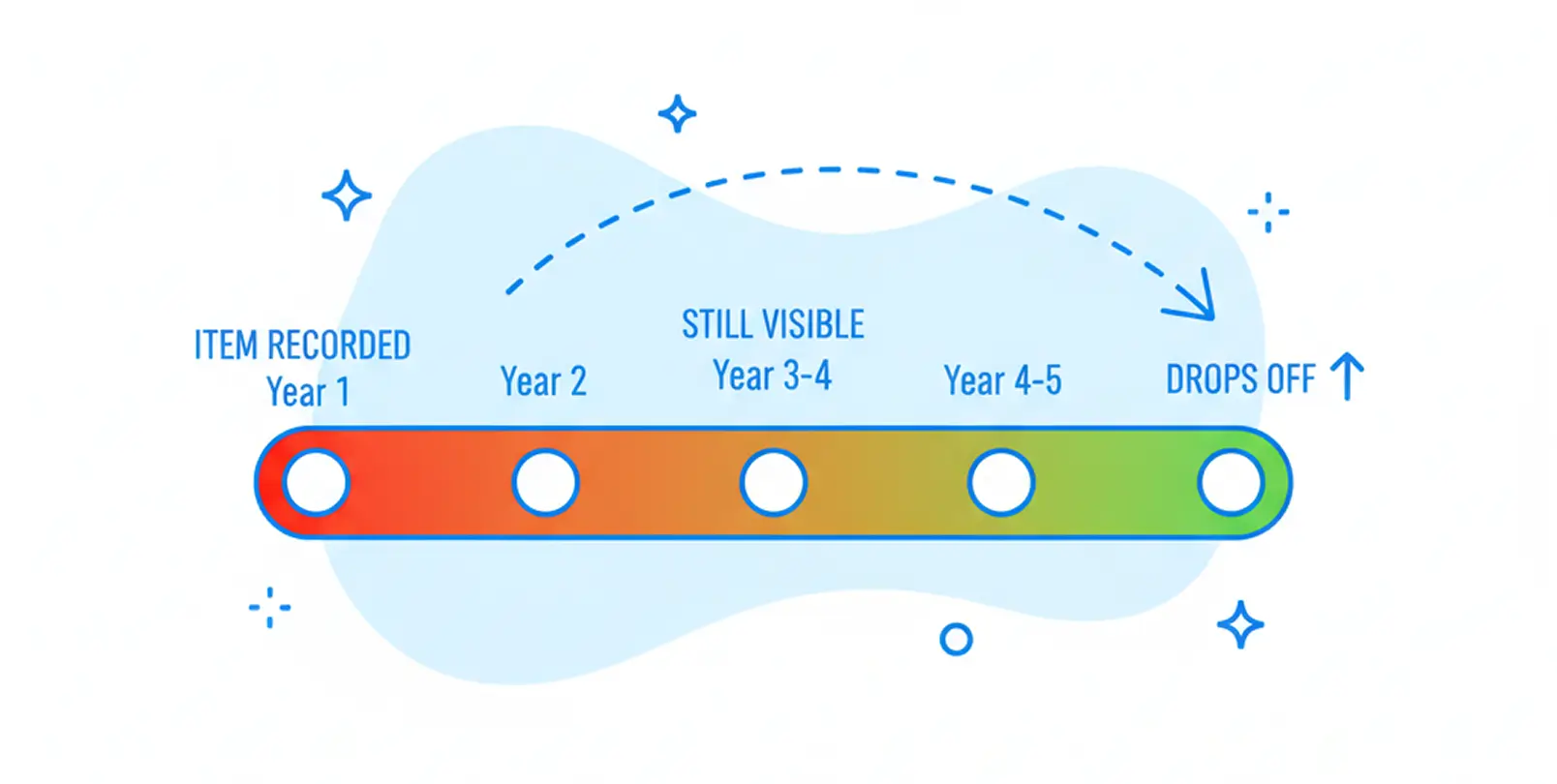
Most negative entries stay on your UK credit file for six years from the date they were recorded. That includes:
- Missed payments (recorded month by month)
- Defaults (from the date of default, not the original account opening)
- CCJs (from the date of judgment)
- IVAs and bankruptcy (from the start date)
After six years, the information must be removed automatically by the credit reference agencies (Experian, Equifax, and TransUnion). You don't need to ask. See our full breakdown of how long negative information stays on your credit report for more detail on each entry type.
One partial exception: if a CCJ is paid in full within one calendar month of the judgment date, you can apply to have it removed from the register entirely rather than marked as "satisfied." Outside that window, a paid CCJ stays on your file for the full six years but is marked as "satisfied."
What you can challenge: errors on your credit report
While accurate negative information has to run its course, inaccurate information is a completely different story. Under the Consumer Credit Act 1974 and UK GDPR, you have a legal right to challenge anything on your credit file that's wrong.
Examples of errors worth disputing:
- A missed payment that you actually paid on time
- A default recorded against the wrong person (identity mix-ups are more common than people think)
- An account you don't recognise (potentially fraud)
- A CCJ registered to your address but not to you
- Duplicate entries for the same debt
- Out-of-date information that should have been removed
If any of these are on your file, you can raise a formal dispute with the credit reference agency that's reporting the data, free of charge. The CRA is legally required to investigate and either correct the entry, remove it, or explain why they consider it accurate.
For a step-by-step walkthrough of how to do this, see our guide on raising a dispute with a credit reference agency, and our guide on how to spot errors on your credit report in the first place.
What about "goodwill" removals?
Occasionally, lenders will agree to remove a single missed payment from your file as a gesture of goodwill — usually if you've been a long-term customer with an otherwise clean record, and there was a genuine one-off reason for the late payment (a bank error, a hospital stay, a bereavement). This is entirely at the lender's discretion. It isn't a right, and there's no standard process.
If you want to try, contact the lender directly in writing, explain the circumstances, and ask politely. Don't pay anyone who claims they can negotiate this on your behalf — you can do it yourself for free.
Can you access your credit report to check for errors?
Yes, and this is the important starting point. Every UK consumer has a statutory right to a free credit report directly from each of the three credit reference agencies:
These statutory reports show the raw data each agency holds on you, and raising a dispute directly with them doesn't require any paid service. They don't usually include extras like a credit score, monitoring alerts, or dispute assistance — but they're the baseline every consumer is entitled to for free.

If you'd like a more complete view — your score, ongoing monitoring, and guided help to raise disputes — UK Credit Ratings offers a 14-day trial that gives you access to all of this in one place. Our service doesn't change the outcome of any dispute; it's designed to make it easier to keep track of your credit file over time.
Start your free trialAfter the 14 day trial, there will be a fee which is applied unless cancelled. At signup you will get to review all the terms. You can cancel your trial at any time during or after via your account or by contacting our support team.
FAQ
Can I pay a company to remove bad credit history from my report?
No legitimate company can remove accurate negative information from your credit file. Anything promising otherwise is often misleading, or charging you for something you can do yourself for free — raising disputes on genuine errors.
How do I remove a default that's already been paid?
A paid default stays on your credit report for six years from the original default date, but it will be marked as "satisfied." A satisfied default may be viewed more favourably by some lenders than an unsatisfied one, even though it's still visible.
Will my credit score go up automatically when a default drops off?
In many cases, yes. Once the six-year period ends, the CRA must remove the entry, and lenders scoring your file will no longer see it. Any improvement depends on your overall credit profile, so it isn't guaranteed to happen at a predictable pace.
What's the difference between disputing an error and "credit repair"?
Disputing an error is a statutory right — you're correcting inaccurate data, and it's free to do directly with the CRA. "Credit repair" is a marketing term sometimes used by companies that claim to remove accurate negative data, which isn't legally possible. The two are often confused.
Can I remove a CCJ from my credit file?
Only if it was recorded in error, if you pay it in full within one calendar month of the judgment date (in which case you can apply to have it removed entirely), or if the six-year period expires. Otherwise, a CCJ stays visible for the full six years.
Learn more about how long defaults and CCJs stay on your credit report and how to raise a dispute. For a full overview of your options, visit our guide to Disputing Errors on Your Credit Report.